

In conversation: Oksana Beilakh
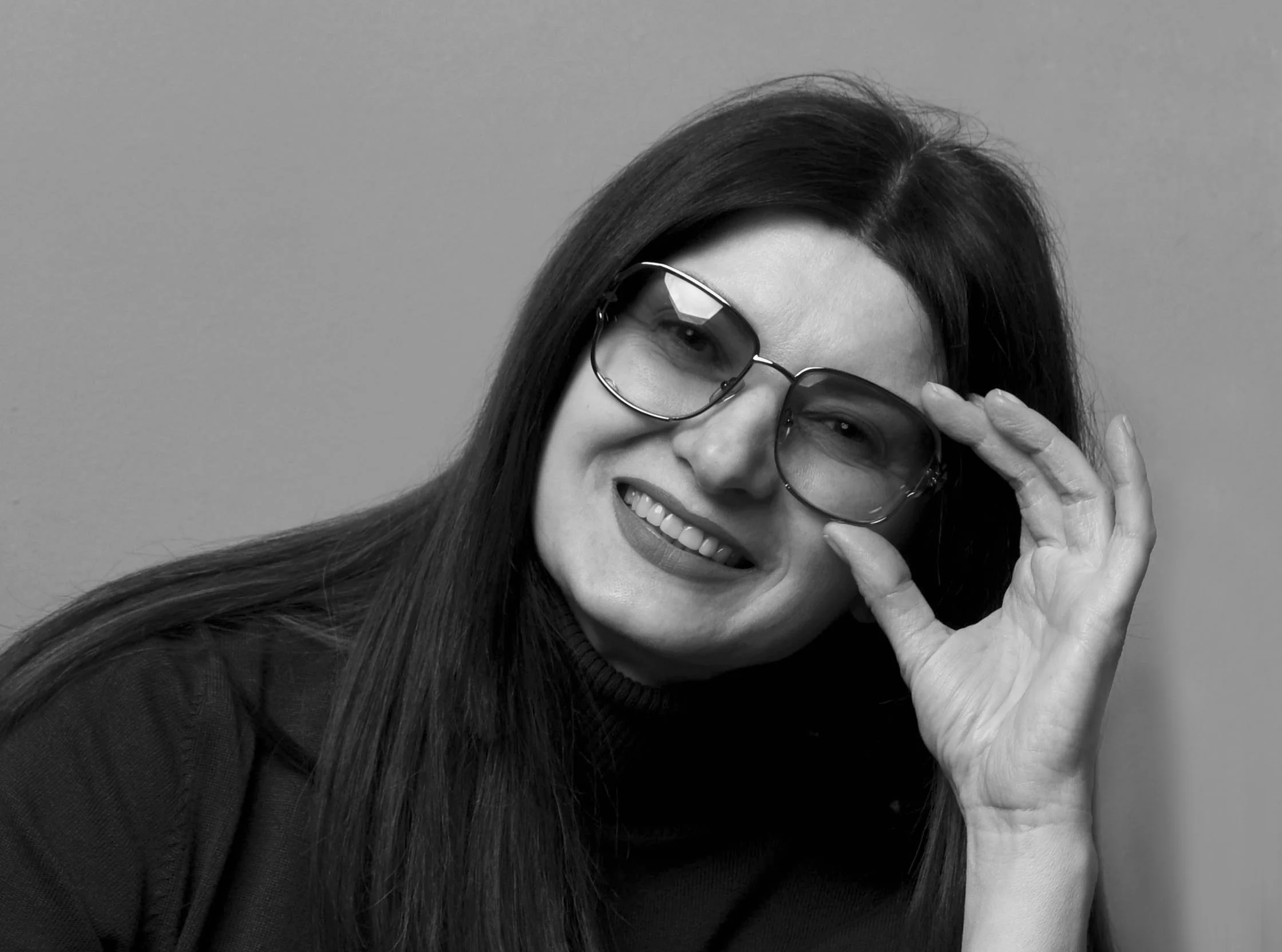
Oksana Beilakh is an artist and designer based in Ivano Frankivsk. She is an Assistant Professor in the Department of Design and Art Theory in the Institute of Art at Vasyl Stefanyk Prykarpatsky National University. Oksana holds two degrees - one in leather work from the Kosiv Technical College of Folk Crafts (1988) and a second in graphic design from the Prykarpattia University (1996). In addition to research in the history of design, her creative work centers around fashion design, contemporary textile art and decorative leatherwork.
What sparked your interest in traditional Ukrainian craft (especially the embroidered blouse)?
To be honest, my interest in tradition came to me pretty late despite a childhood immersed in it in one form or another. My grandmother was constantly embroidering when she wasn’t preparing meals or doing other work around the house. But this was in the 70’s and it was the height of the Soviet Union, so her embroidery was mostly decorative pieces for interiors - tablecloths, pillows, napkins, etc. It’s no accident that these are items around which it's hard to build a cultural identity - the really authentic pieces were all destroyed by the Soviet regime. So at the time, I couldn’t really understand why she or my mother embroidered. But I guess the saying goes, “what is coded into your genes will eventually be expressed.”
In those days, all of the stores sold the exact same thing - the same clothing, the same furniture, the same kilims. As a young, fashion-obsessed girl I wanted to look different. My father owned a fabric store, so I learned to sew and that’s how I began experimenting with and manipulating different textiles, ropes, beads etc.
Finally there came a moment when I was struck with the desire to have an embroidered blouse that would be different from anything else. According to folk myths, if you wear second-hand embroidered blouses, you’re destined to repeat the life of the original owner. So I began the research and design process to design a shirt of my own.
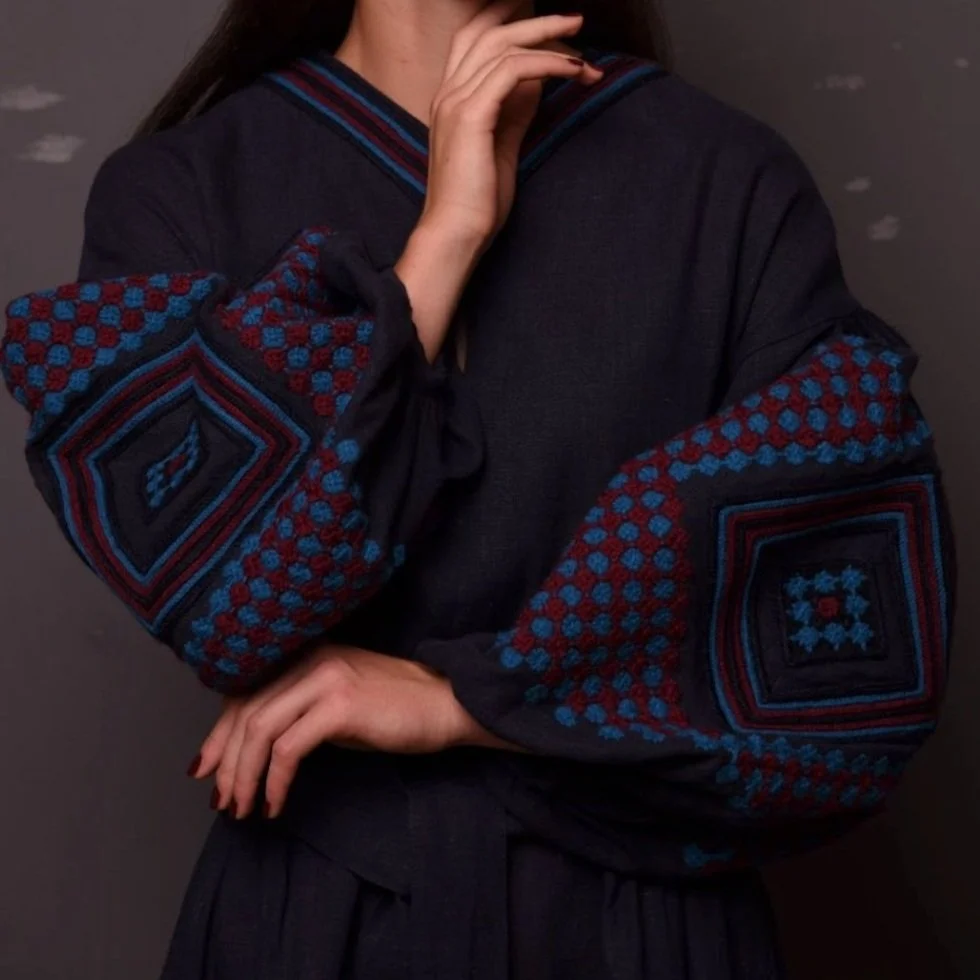
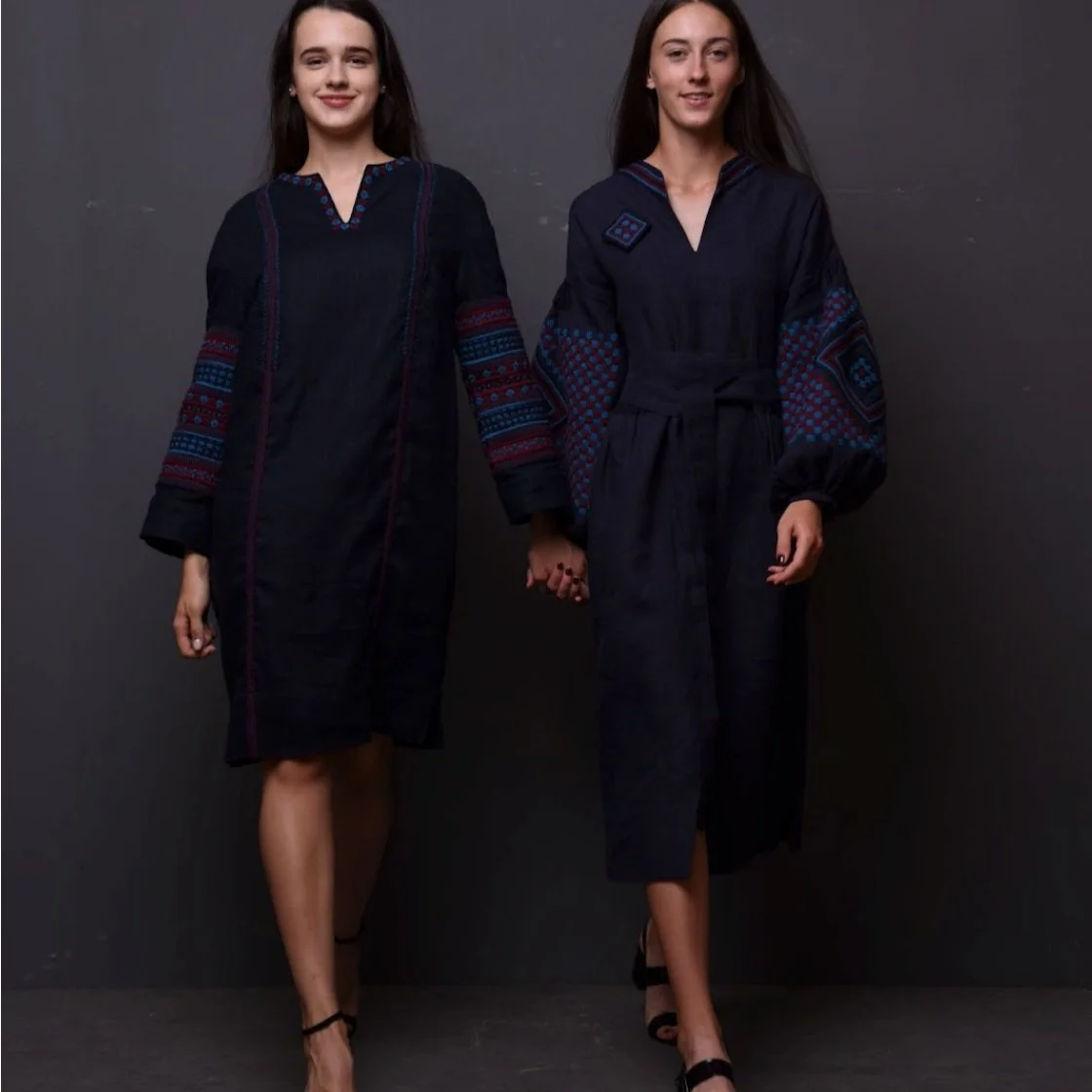
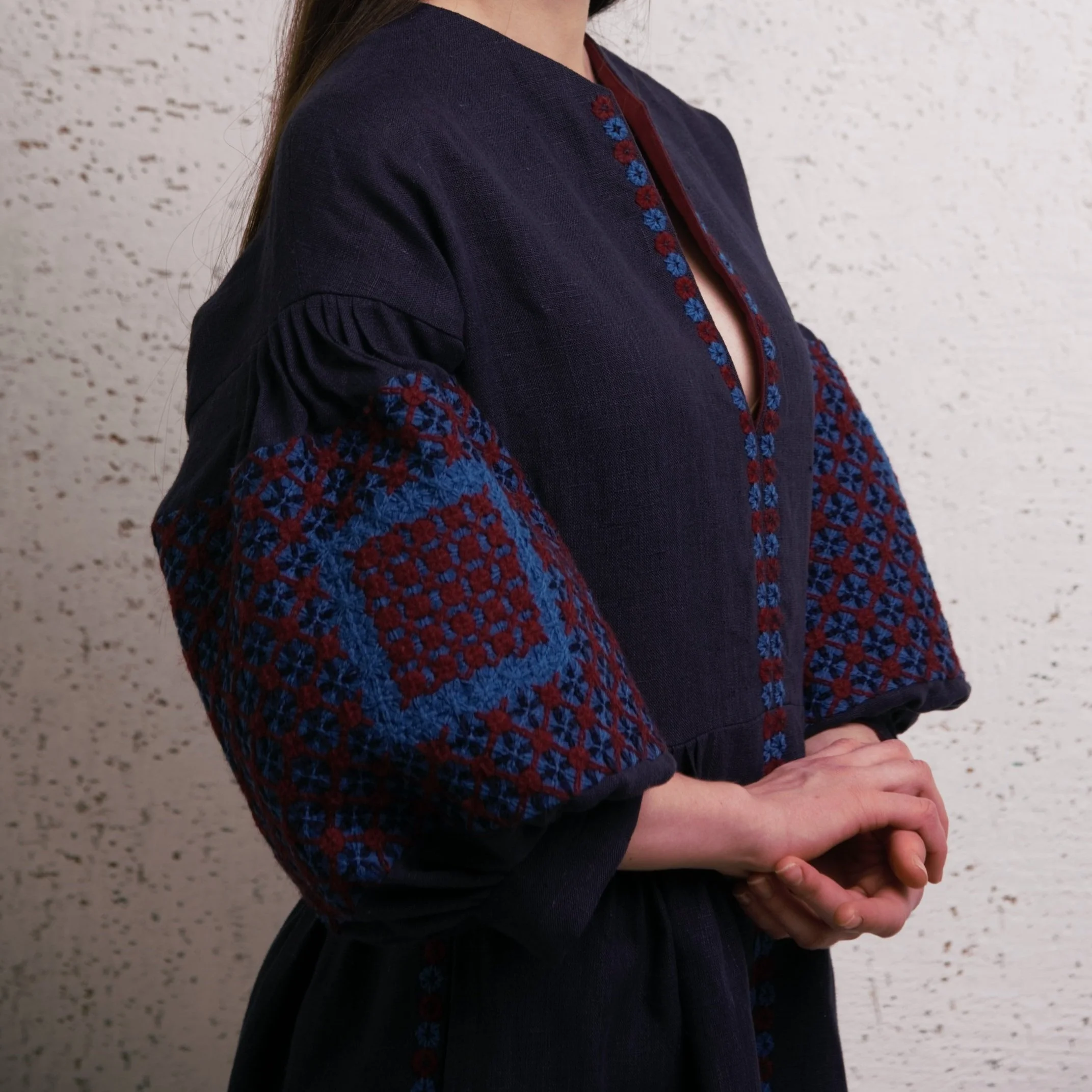

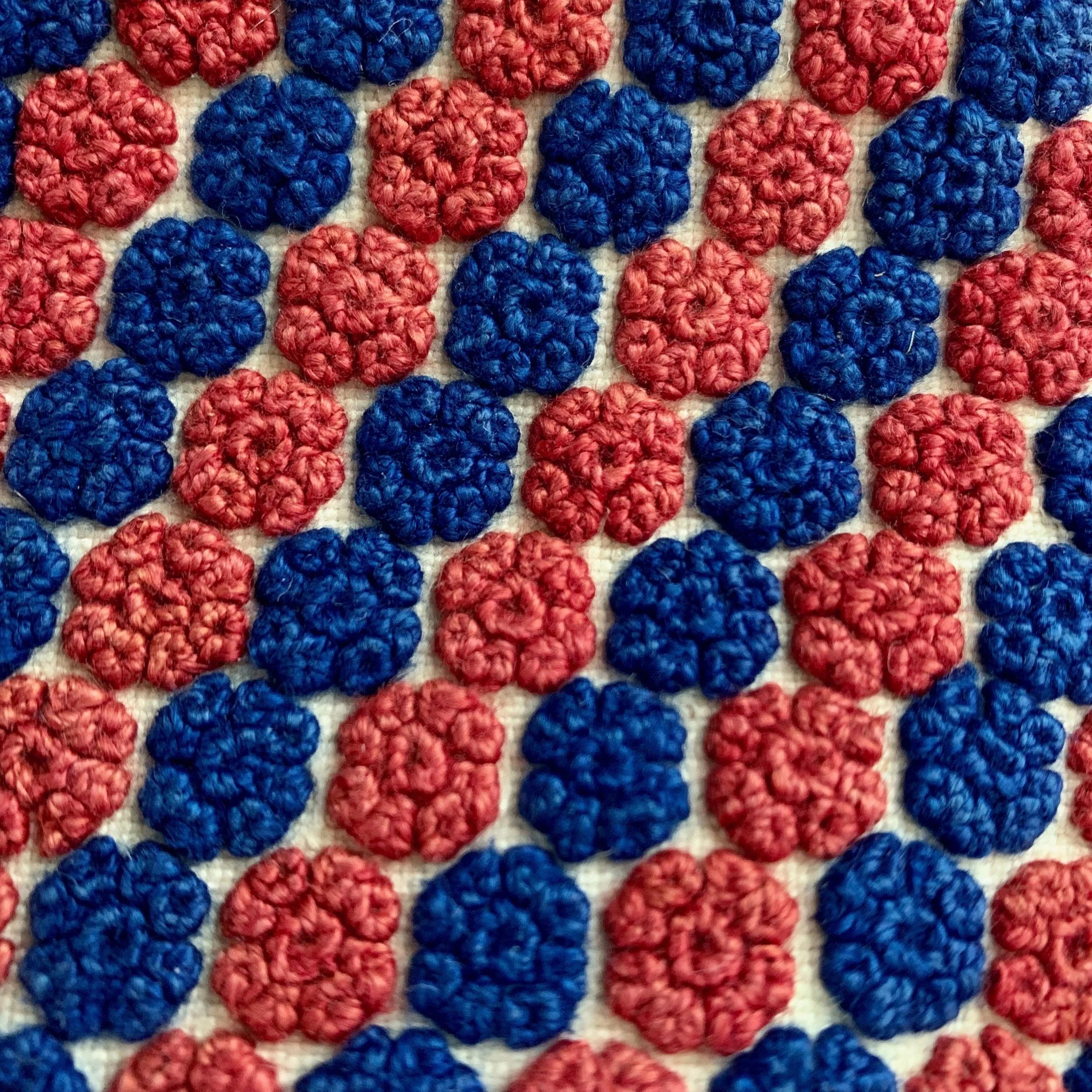
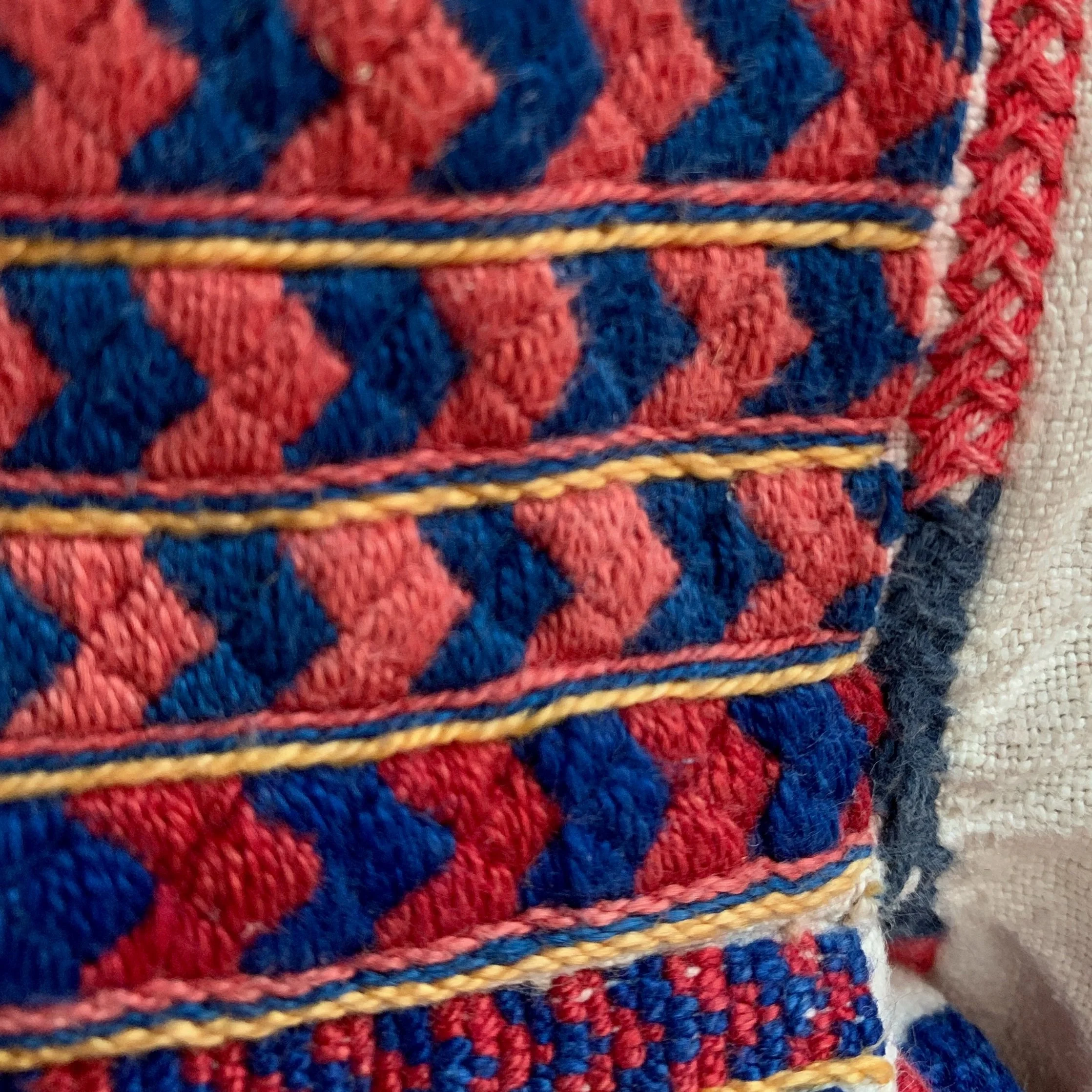
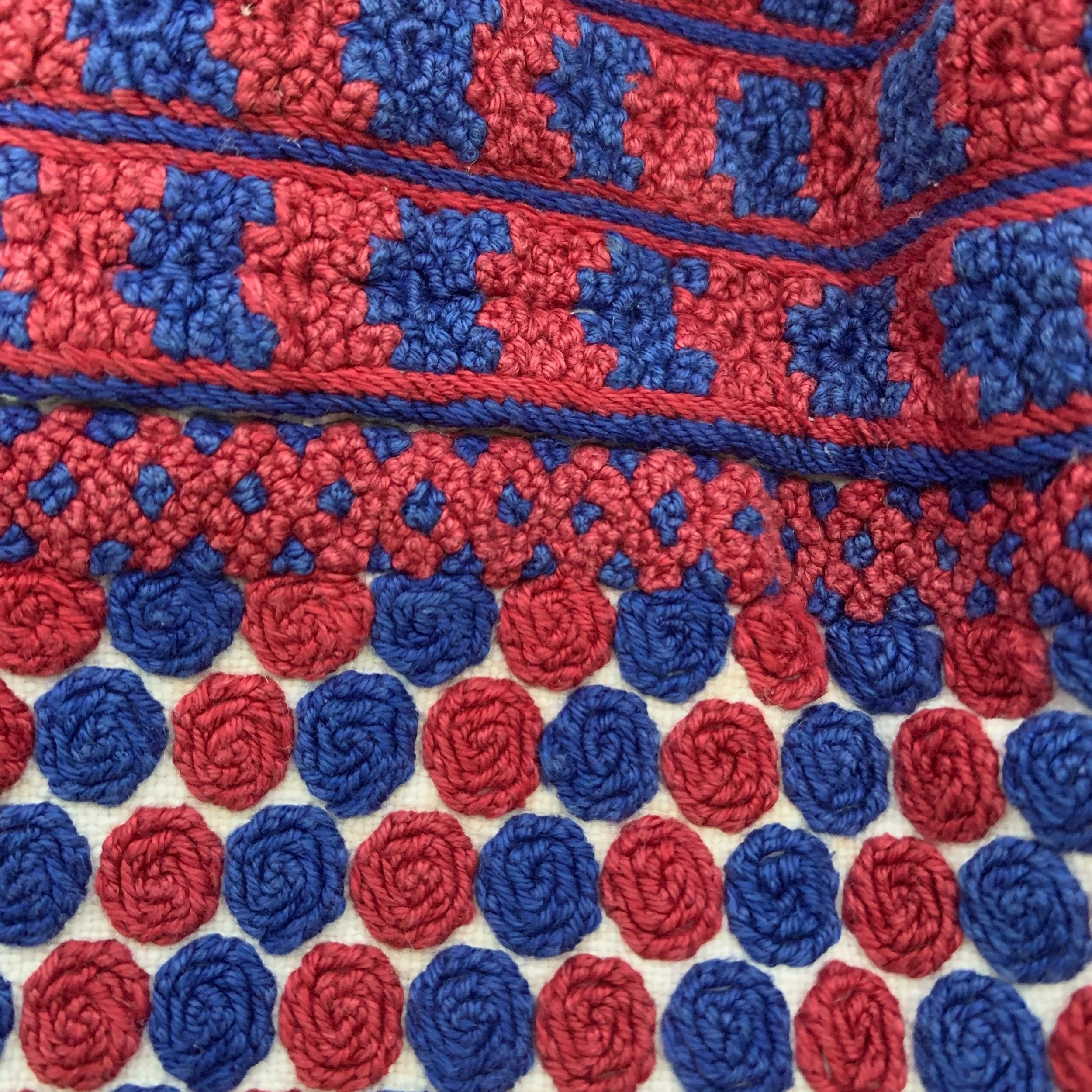
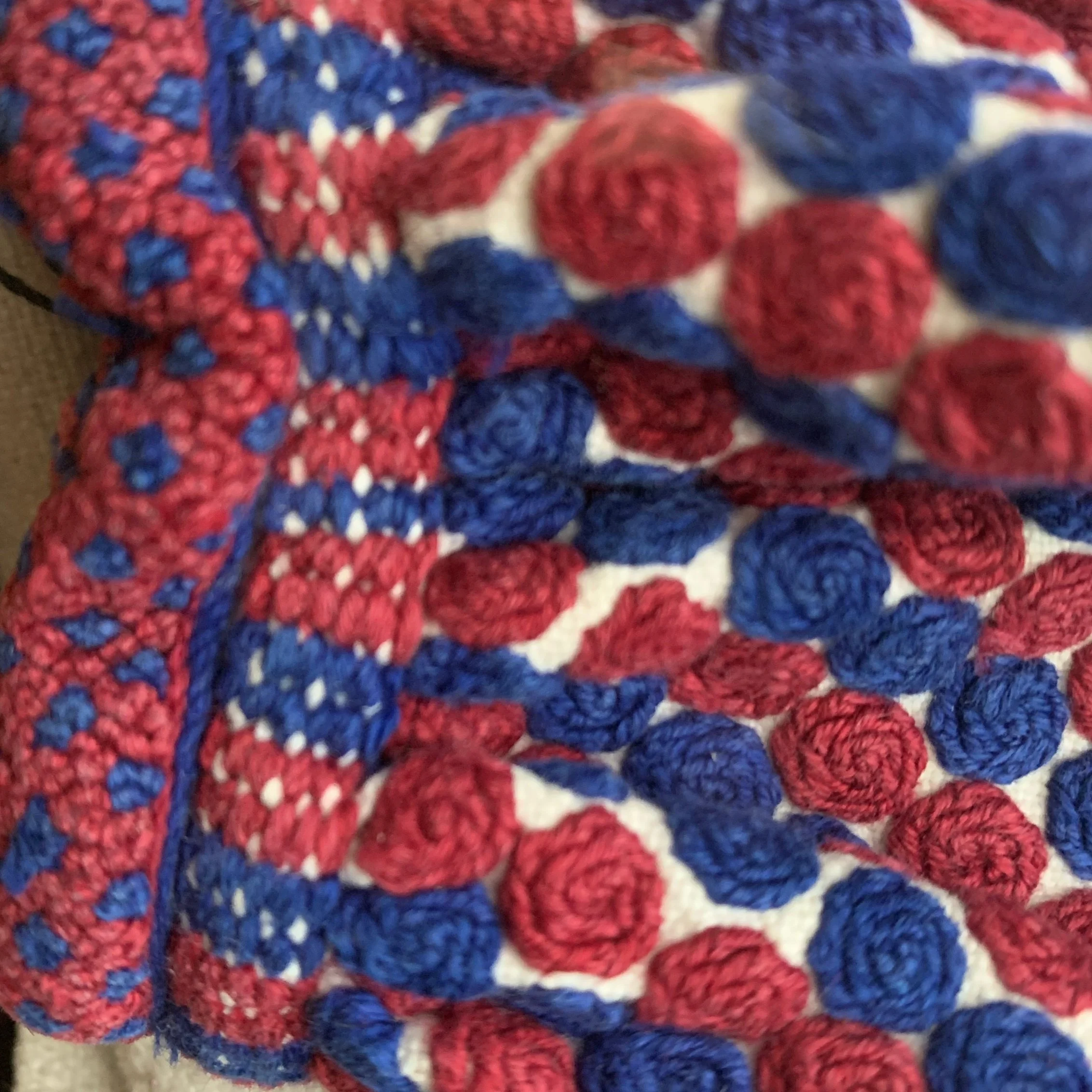
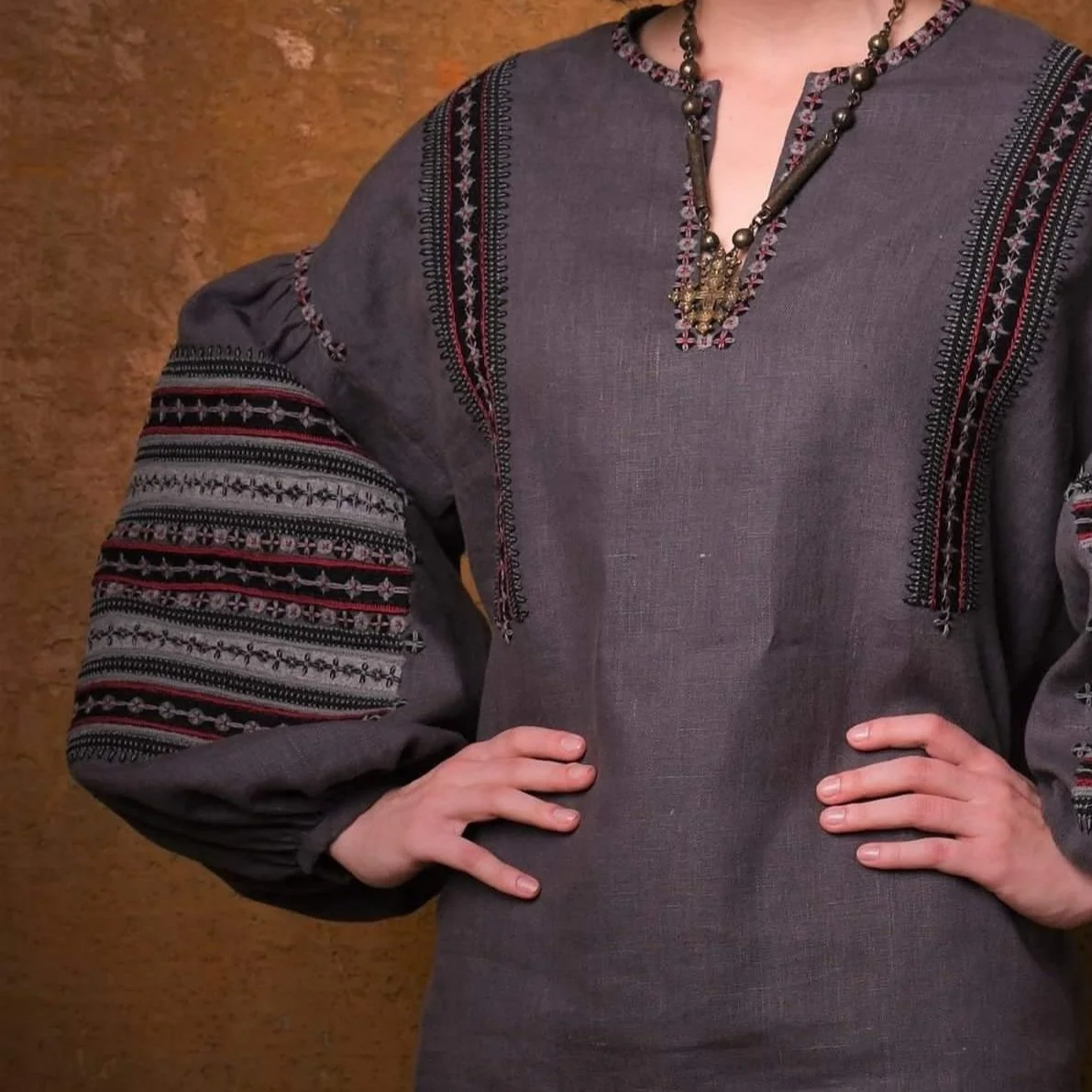
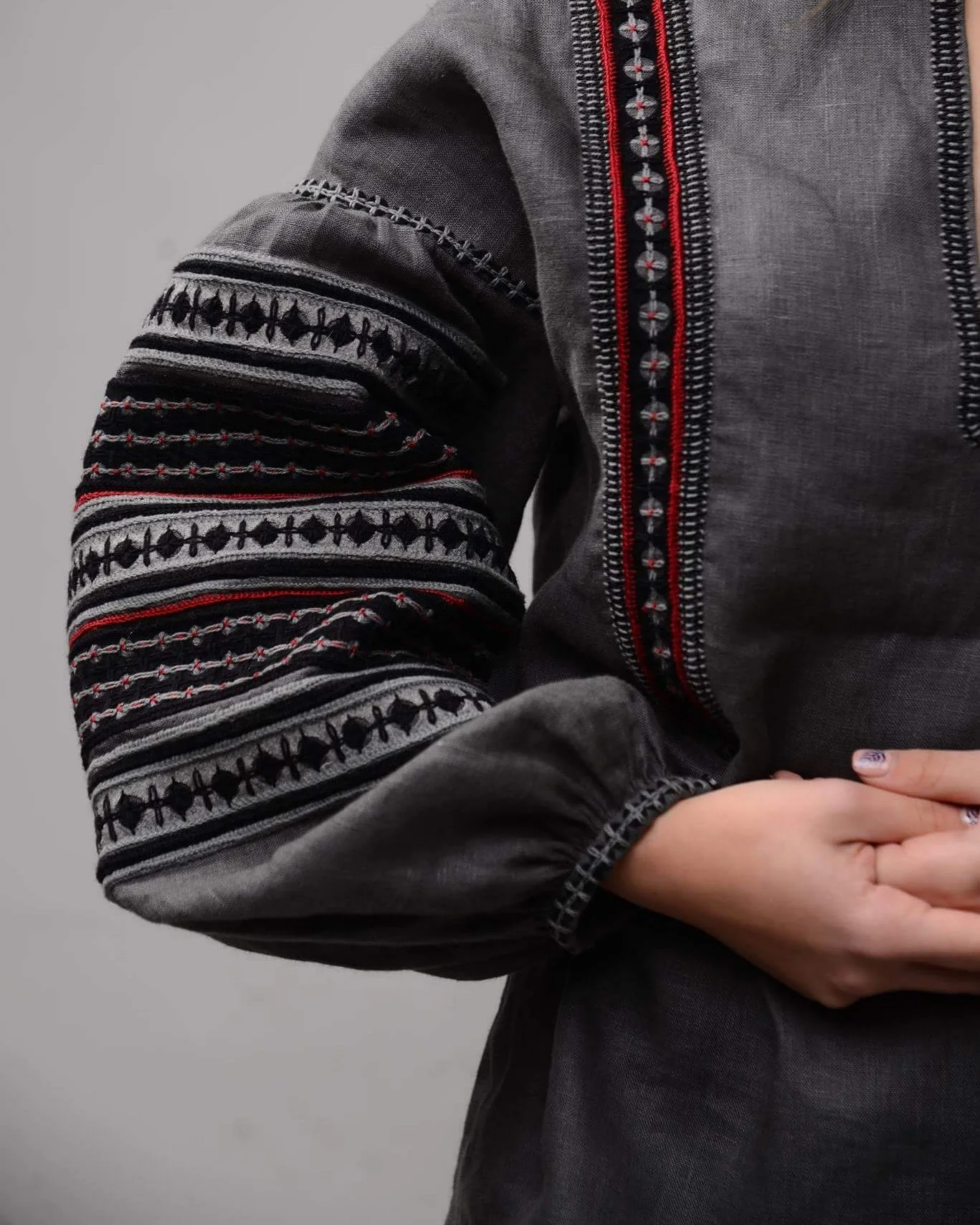
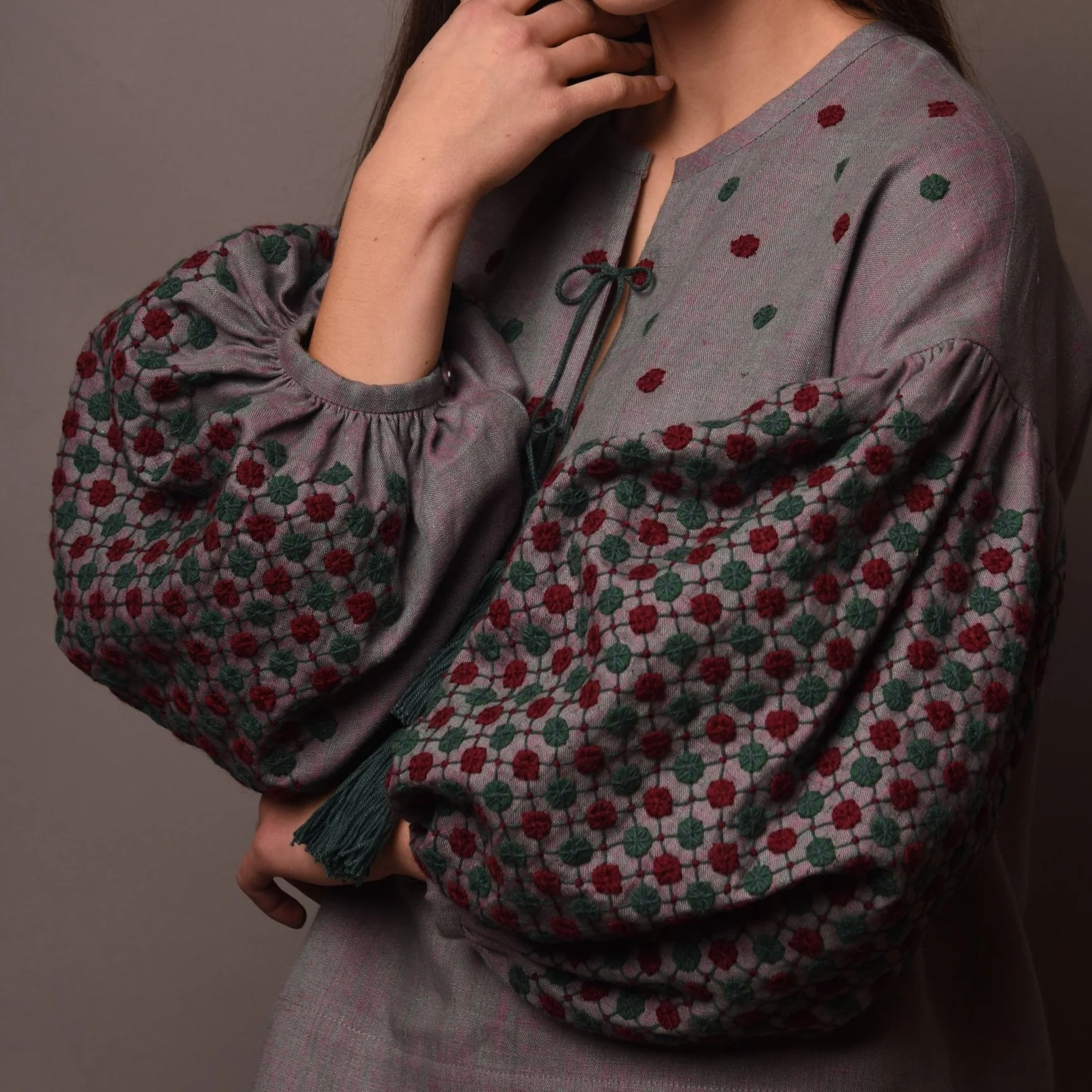
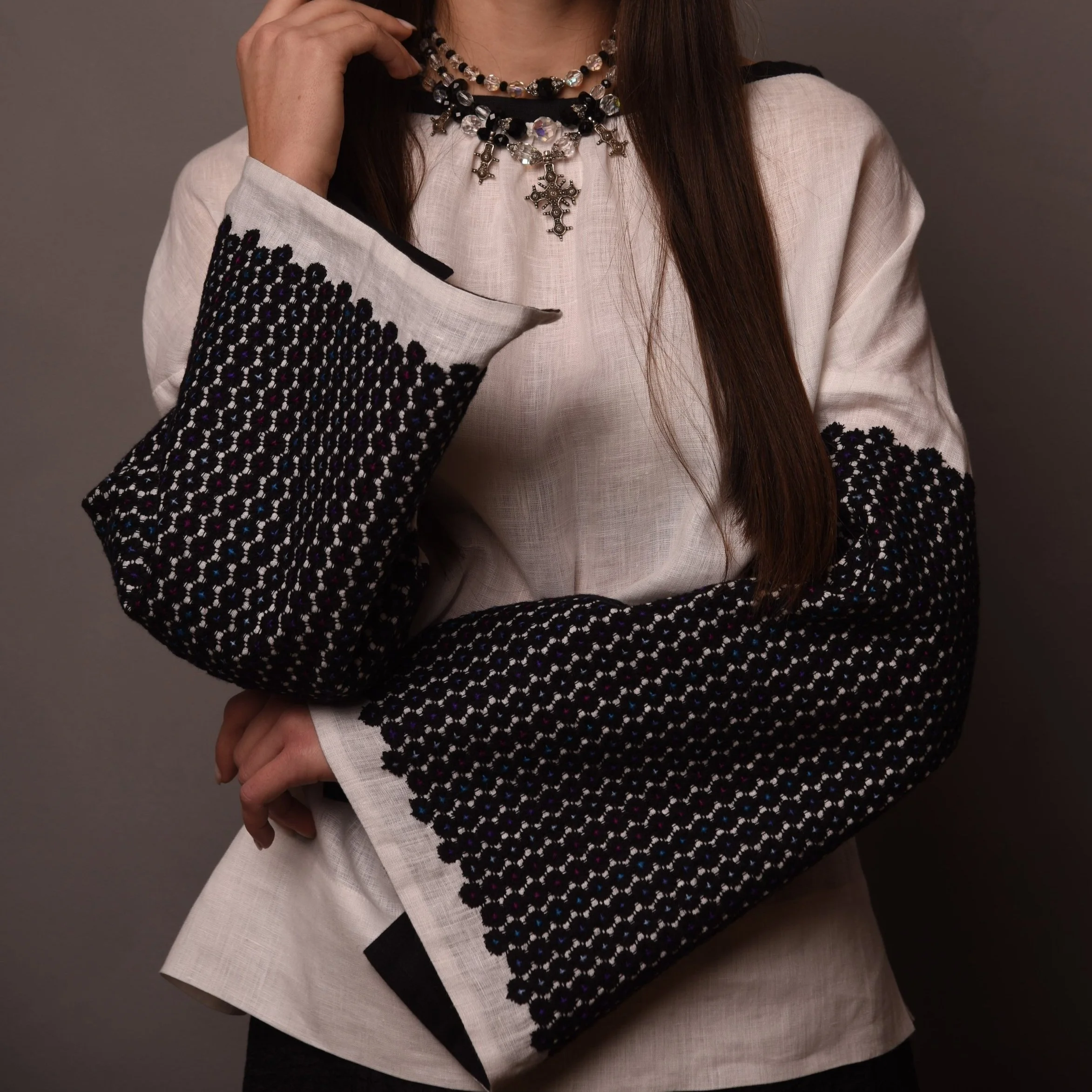
My starting point was embroidery from Borschiv and Verbovets. My goal was not to master the authentic techniques but to use elements of the aesthetic, including the characteristic densely embroidered sleeves with wool threads. This led to a series of experiments with textiles that resulted in the dying techniques I use today and other personal techniques like embroidered “perfo-appliqué” which is a combination of embroidery, perforation and appliqué.
What is your research process like? What resources are most valuable to you?
I live among traditions - my surroundings are saturated in them. The country I was born in, my family rituals and celebrations, my grandmother’s stories - all of this is subconsciously transmitted in my creative work.
When it comes to ‘formal’ sources of inspiration, the art museum in Kolomiya (The National Museum of Hutsulshchyna and Pokuttya Folk Arts) is a great source of inspiration for me. But visiting museums has changed so much since the beginning of my artistic career. Earlier, we would visit a museum or go to a library and meticulously sketch the object or the work that inspired us. I had dozens of sketchbooks full of inspiration. I feel that I can still remember the objects I sketched twenty years ago.
Today, my students leave a museum with dozens of photos on their iPhone. However, we are so oversaturated with visual stimuli that I think we have unlearned how to see. Photography has eliminated the need to study the essence of the object. When you bring a perfect photograph of an object back into your studio, it’s very hard not to copy it because you haven’t actually “seen” it.
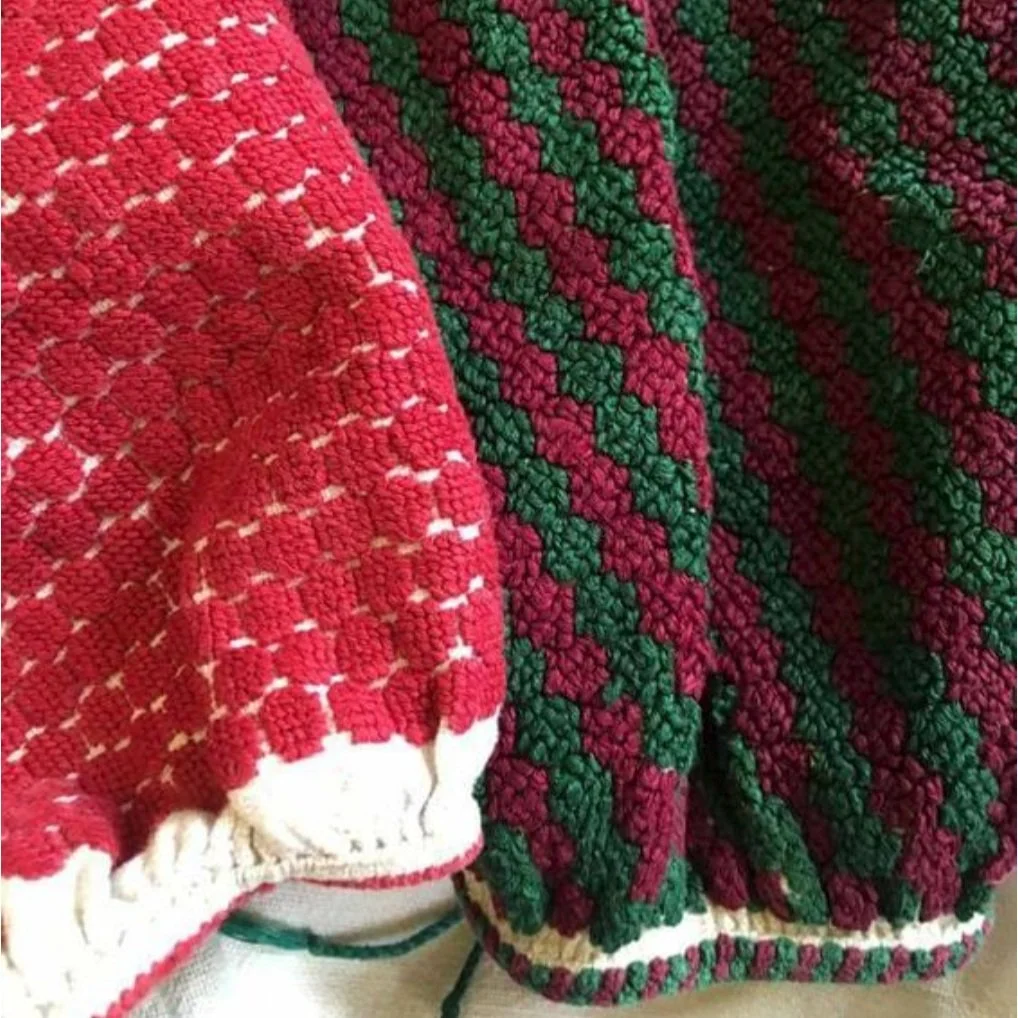
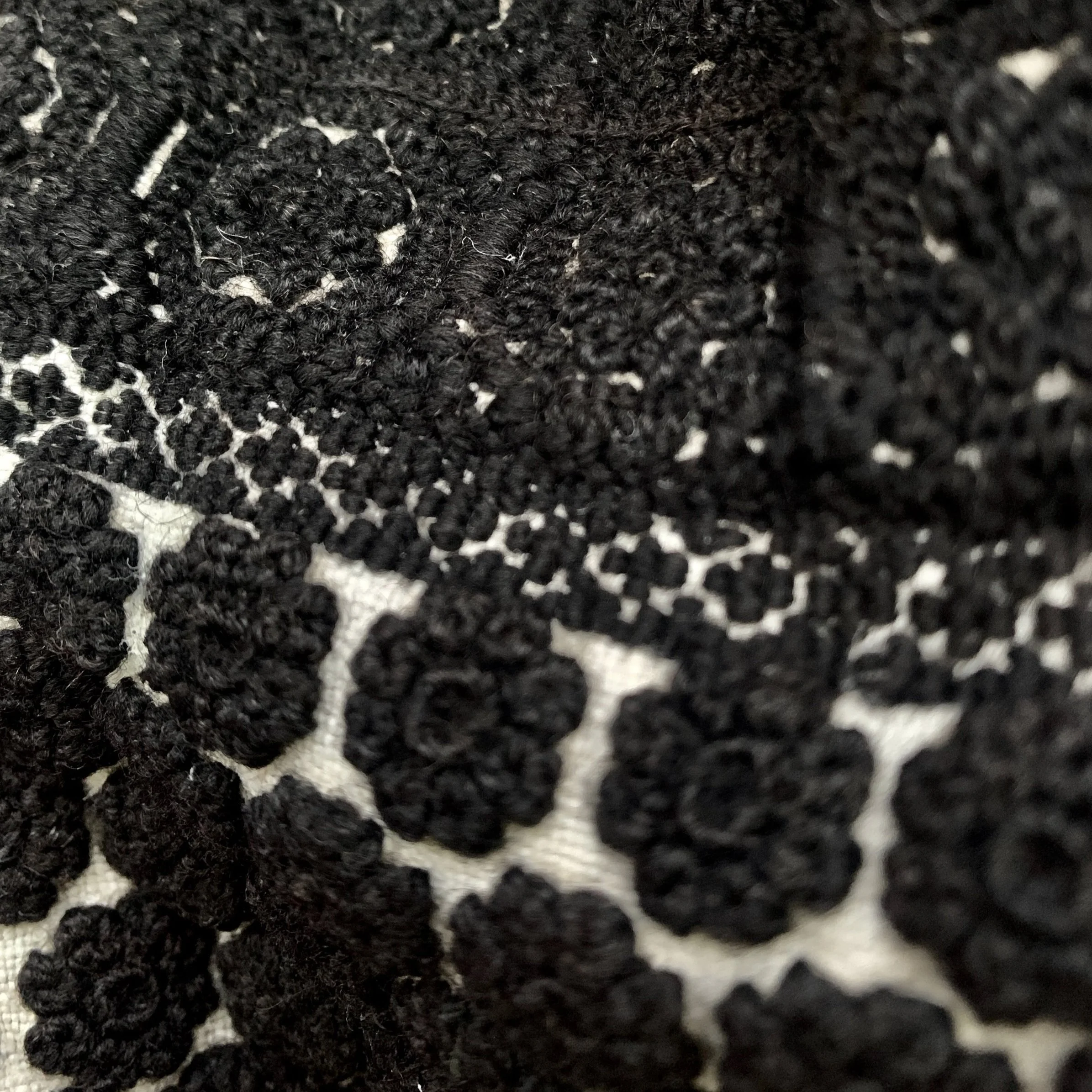
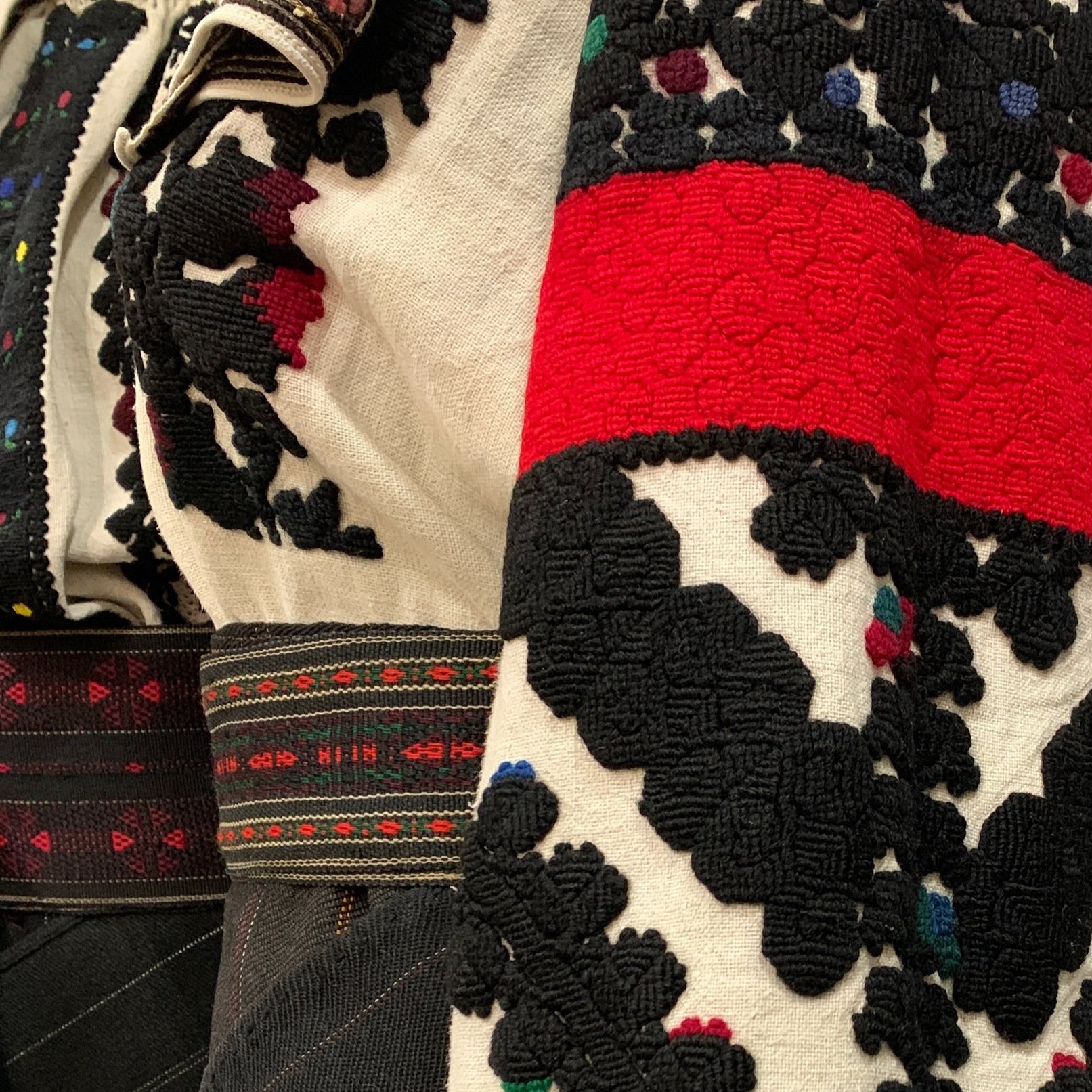
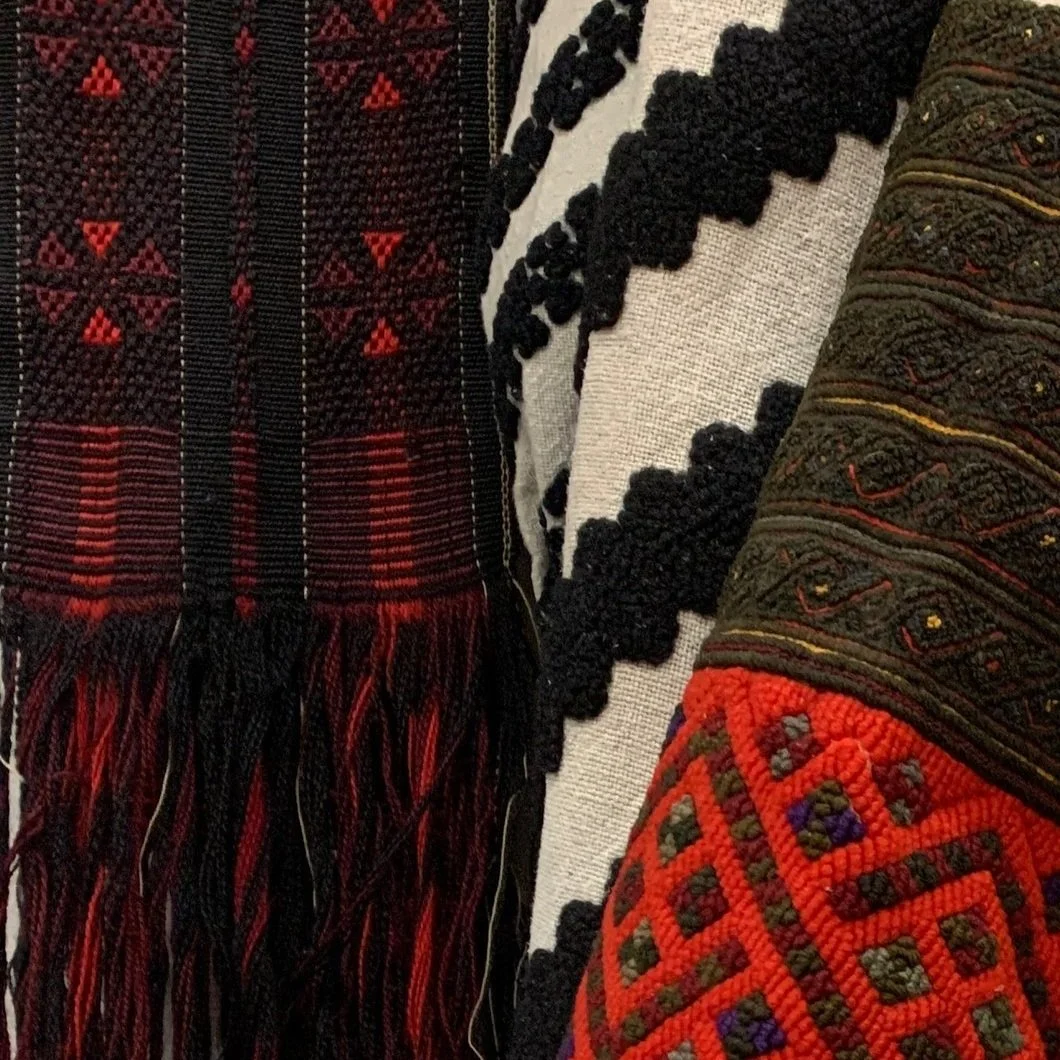
Artists are visualists - they need to research and explore with their eyes. The way you take notes is by taking a photograph with your eyes. When the image is processed in your memory, it takes on new life. You only need to see something once, and it will have already left its mark on you.
You must take in the inspiration and let it pass through the prism of your talent.
So, I coach my students to study an object, and then to focus on a specific aspect of it - the color palette, the form, the proportions, or the materials. That element (rather than the object in its entirety) becomes the key ingredient in what they are creating. This is where experimentation comes into play. It’s the moment when you discover something new and interesting based on something existing. Then you continue to iterate on the results of that experiment by applying it to different materials or altering its application to the same material.
How do you see the decorative arts space developing in Ukraine? Is there more research to be done?
During the Soviet Union, when the borders were still closed, we had little access to the outside world and other trends, traditions and new ideas - this is especially when it came to decorative art, which remained very conservative and new thinking was largely suppressed.
Today there are many designers who study traditional techniques to recreate them exactly and that is really important, but it’s also exciting to see that there is a new wave of designers merging tradition with technology and pushing Ukrainian work in new directions - Mykola Strynadiuk, a wood worker is a great example. The possibilities are endless, and I personally feel like I don’t have enough time to explore it all. But the fact is that I don’t think there are enough people creating deep, thoughtful and well researched work.
I believe that there is a wealth of research on embroidery, weaving, and many of the other traditional techniques.
In fact, I think it’s over-researched but this knowledge remains in academic circles and new makers entering the space designers don’t really have access to it.
Within this new wave of makers, you encounter a lot of people who are just producing as quickly and cheaply as possible to make a living. You also see a subset of people who used to be, for example, lawyers or business people. They have the means to buy embroidery machines, fabrics and hire a seamstress, but they pursue their work more as a sport…especially now that “ethnic-wear” is so popular.
I think people optimize for speed and underestimate the work that goes into creating something unique - for example with embroidery you must think not only about the symbols, but also their size, their relative proportion, the color theory, composition, and material choice. It’s not trivial! As a result, people find it easier to just copy the traditional at a superficial level. But it’s not a sustainable “competitive” advantage.
The other important element in this ecosystem is the buyer. Most buyers aren’t really aware of what they are buying or what characterizes high quality craft. But I believe it’s a matter of time for this question to resolve itself - research and information will become more readily available and both makers and buyers will begin to think more critically.
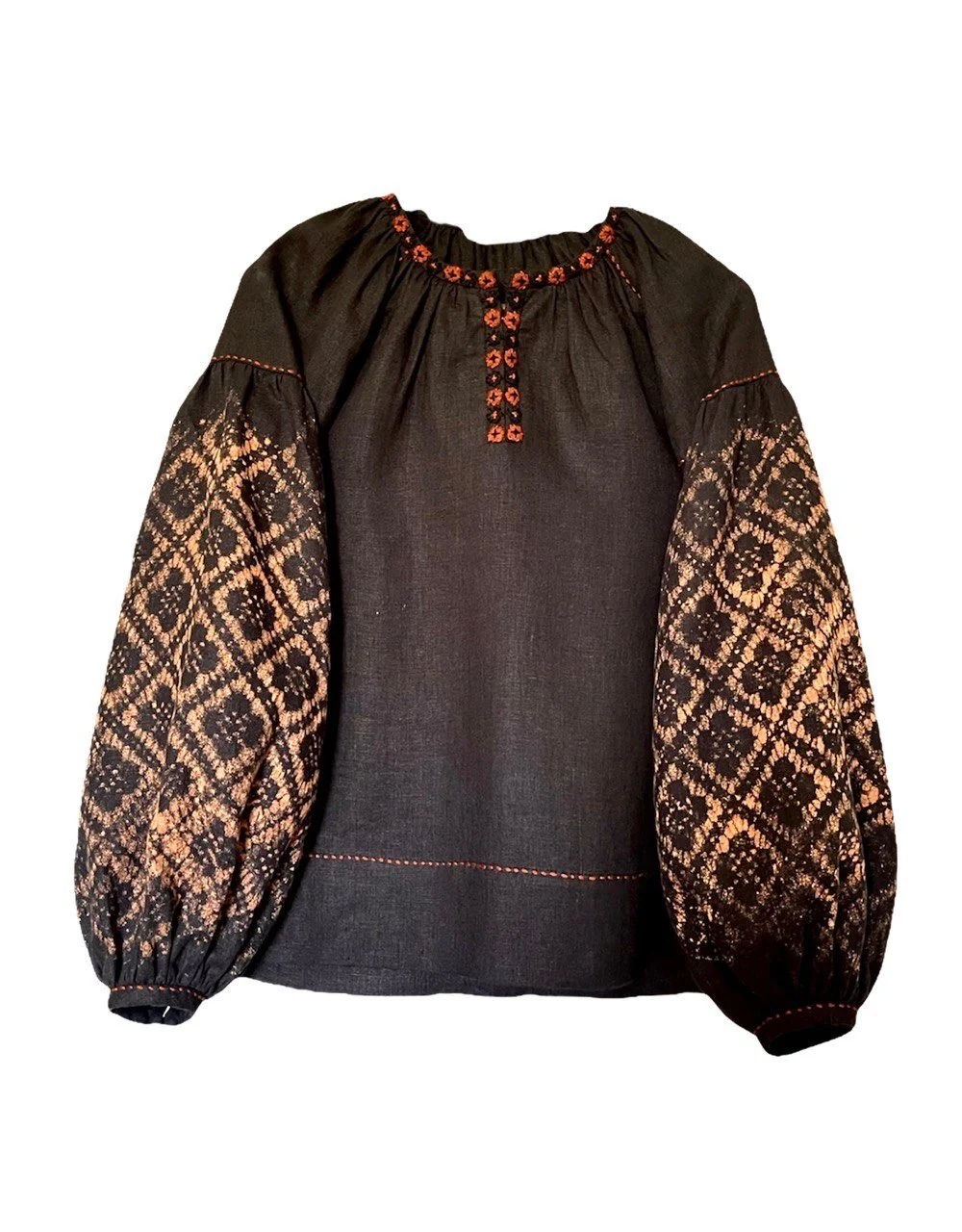
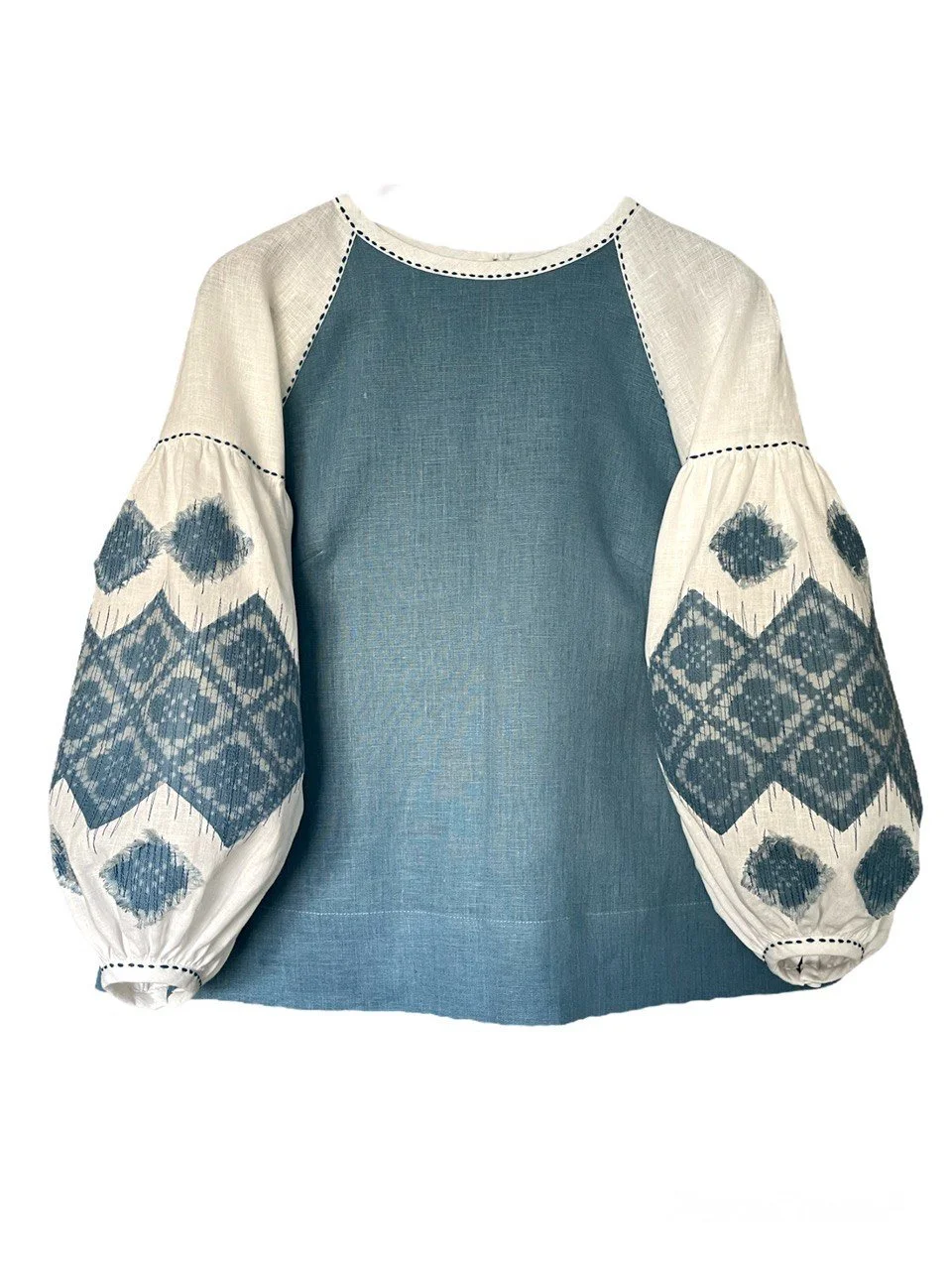
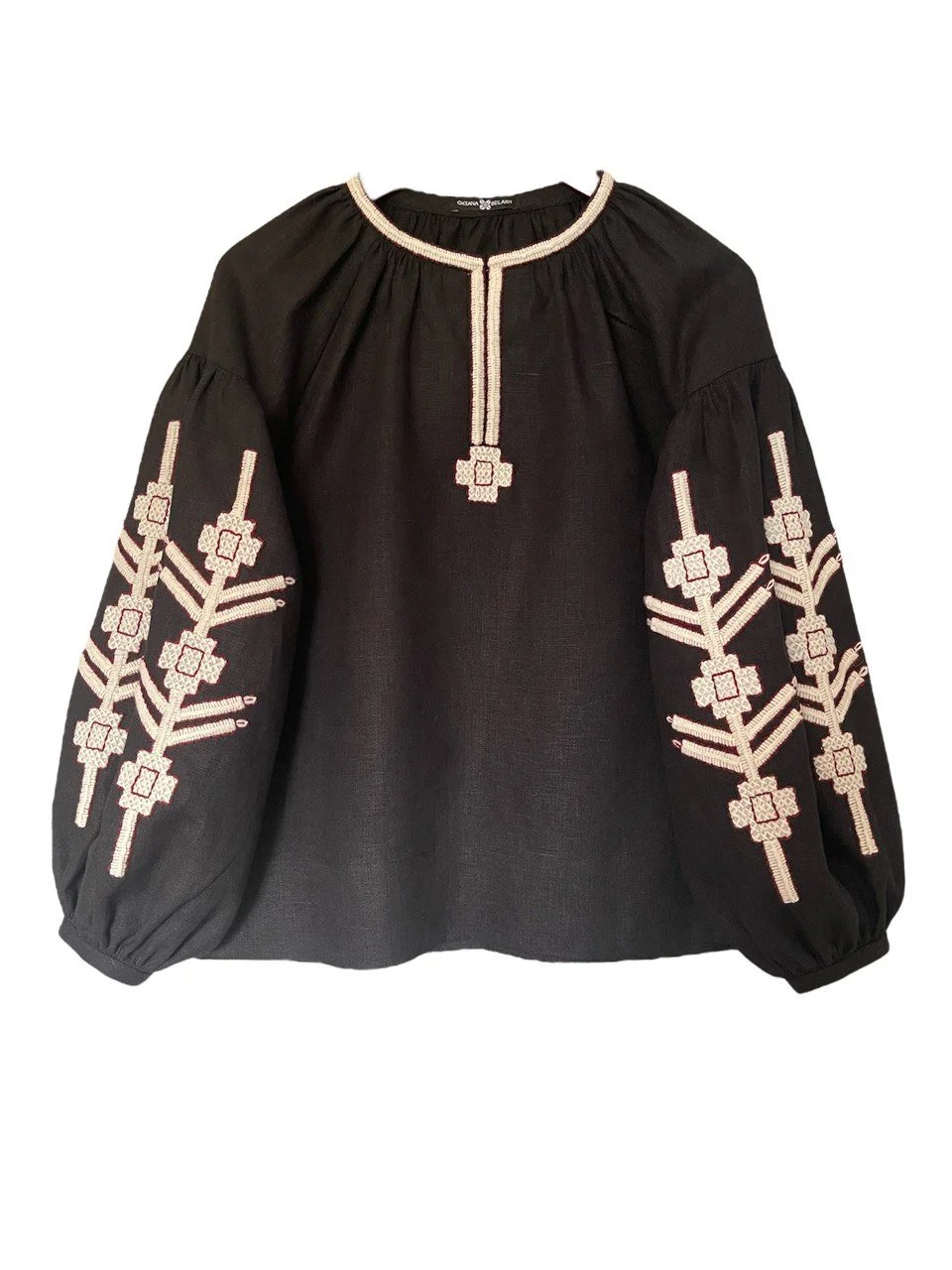
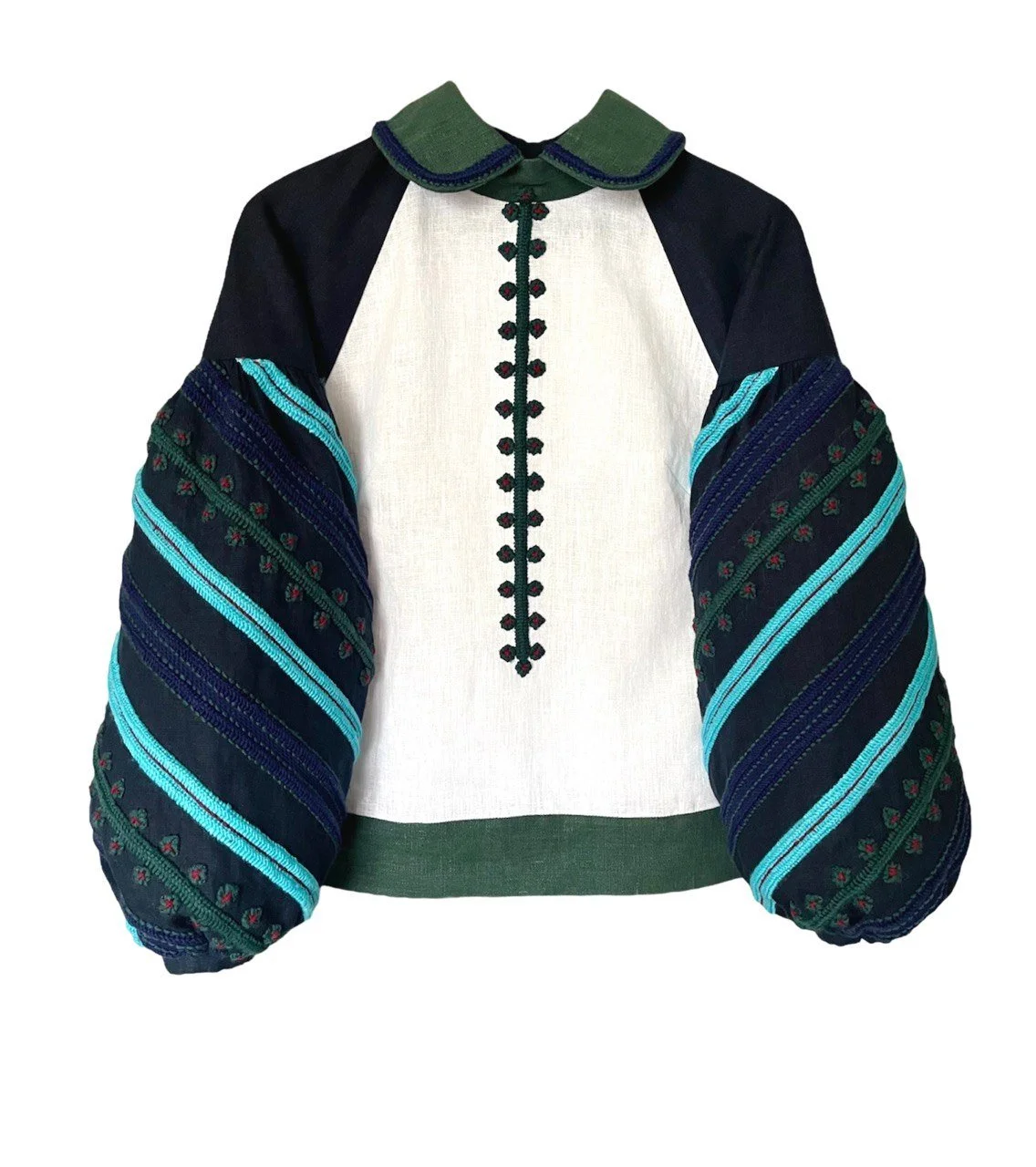
How does this inform your opinion of machine embroidery?
I think machine embroidery is great - the problem is when machine embroidery leads to overproduction, the use of cheap fabrics and careless construction. The items fall apart or don’t hold their shape - they aren’t made to last.
Machine embroidery is the ‘industrial’ choice that allows for the production of high volumes of exactly replicated designs at economical prices. But on average, this process leaves little room for creativity and often leads to a reliance on or appropriation of existing designs. Therefore, one must be very skilled to work with machine embroidery, just as one must if they hand embroider.
For this reason, I chose to exclusively hand embroider because I feel that I can create more authentically. I never create the same shirt twice – they may be similar, but never identical. Personally, I don’t like repetitive, monotonous work, I like to experiment. As I create each piece, I am looking for slight variations that I can exploit to generate something new. Through this process I have developed a series of techniques, which I feel I can call my own.
What changes have you noticed in your work since the start of the full-scale invasion?
I used to work more systematically. I thought that I needed to lay out a clear work plan for the week, that I needed a dedicated day for certain steps in the creative process, that I needed uninterrupted thinking.
Over the last year I’ve learned to make decisions quickly - to work when there is light or internet. We used candles, head lamps and even Christmas decorations to continue working when there was no power. I used the materials that were available at the time, and just made it work. I say it now with a smile, but if I’m honest, it was really hard. But we survived!
I have so many ideas and time is so limited but now I realize that I have no excuses!